
When Data Fed the Islands
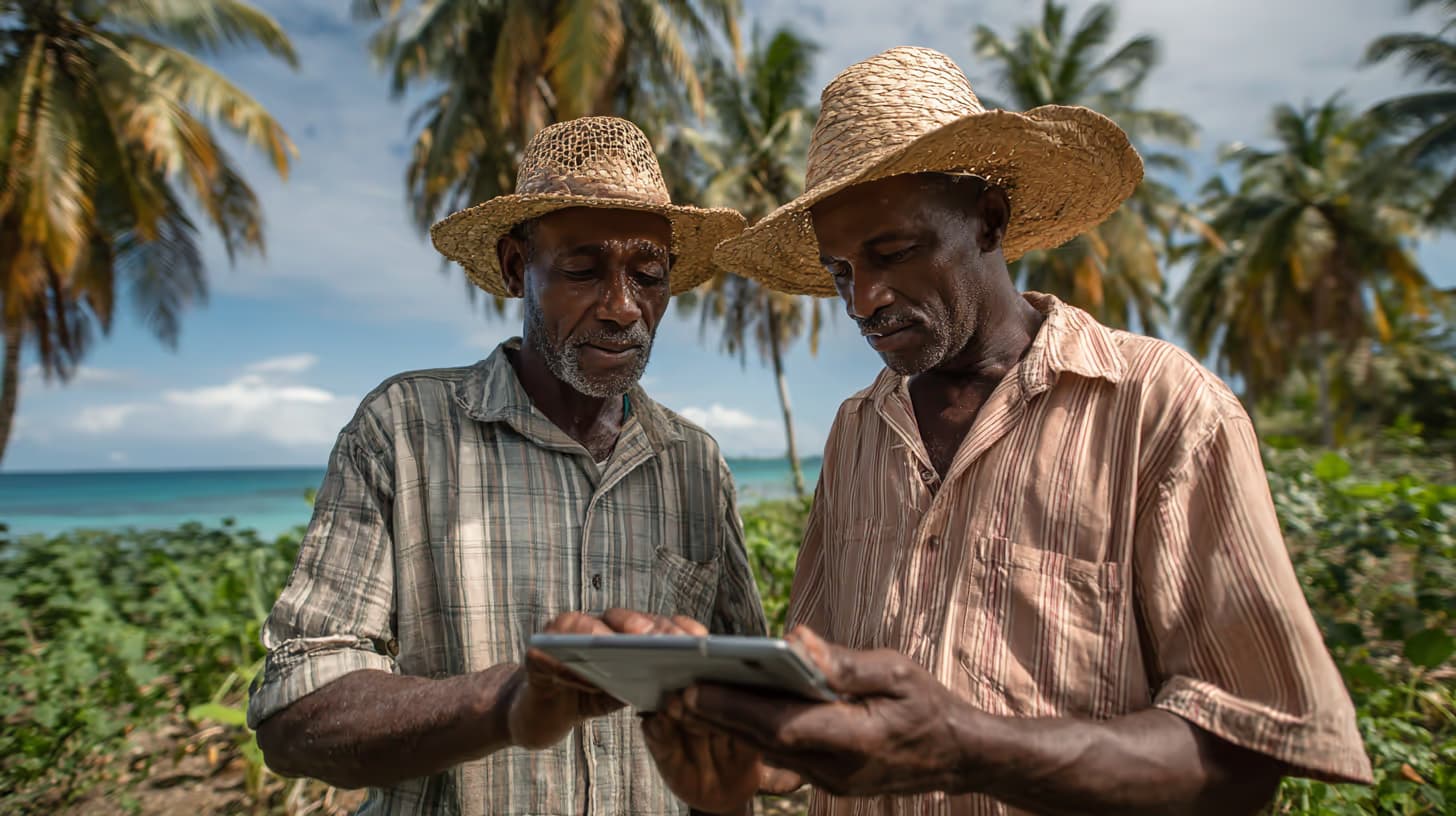
On Barbados, hurricanes were growing stronger while food imports rose to 80% of national consumption. The government launched AgriLink, a regional data network connecting small farmers across islands through weather sensors and crop-yield dashboards. Instead of waiting for shipping schedules, farmers used rainfall and soil-moisture data to time planting and irrigation collaboratively. The platform turned what was once isolation into inter-island cooperation — one chart, many harvests.
Human Impact
Crop losses fell by half in two seasons. Youth farming cooperatives grew, and export revenue stabilized. Elders who once read the clouds now read the charts — both forms of wisdom finally in conversation.
What Went Right
Understanding the key factors that led to success helps us replicate these positive outcomes in other contexts.
Shared Ocean Data: Satellite sea-temperature readings were shared regionally to anticipate storm intensity.
Local Translation: Dashboards used creole and island-specific icons for accessibility.
Collective Action: Farmers coordinated planting cycles to balance regional supply, reducing shortages.
Regional Learning: Schools used AgriLink data in science classes, turning agriculture into applied data literacy.
Ethical Reflection
Data succeeds when it connects communities rather than comparing them. Regional cooperation is a moral technology — a way to make science neighborly.
Chart-Ed Connection
Bridges DLL 6 → 13: connecting relationships in environmental data to stewardship of shared regional systems.
Design & Act
Design a regional data-sharing framework for climate adaptation. Which DLL principles ensure cooperation over competition? How can data help communities prepare together for shared environmental challenges?
Build Better Data Practices
The Chart-Ed Institute for Global Data Literacy provides standards and frameworks to replicate these successes.