
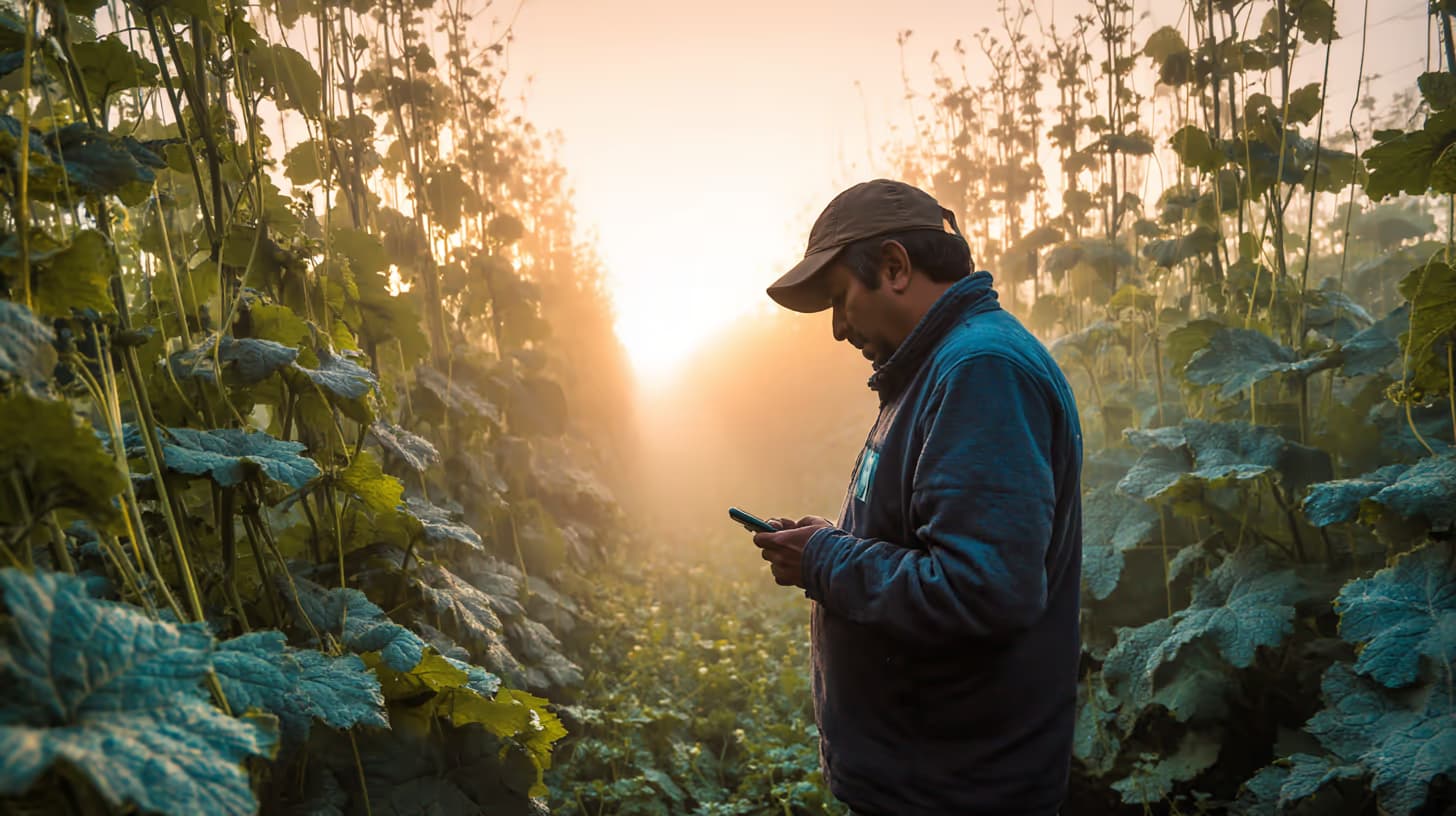
When Data Saves the Harvest
In Chile's Maule Valley, small-scale farmers once guessed when to plant vines and beans based on tradition. Drought cycles and shifting rain patterns had turned their calendars unreliable. A regional cooperative partnered with a university to build a real-time climate-data network — integrating satellite feeds, soil-moisture sensors, and farmer-uploaded readings through open dashboards in Spanish and Mapudungun. Within two years, crop losses dropped by 40 percent. Farmers began teaching others how to read the dashboards, translating data into decisions.
Human Impact
Planting no longer felt like gambling. Families who had once abandoned dry plots returned. Youth groups began mapping soil health, connecting science with civic pride. When a heatwave threatened, alerts reached phones before the wilt did. For the first time, knowledge arrived in time to care.
What Went Right
Understanding the key factors that led to success helps us replicate these positive outcomes in other contexts.
Rather than hoard the models, scientists shared them. The network prioritized local ownership and open access.
Timeliness: Satellite data was processed nightly, not quarterly.
Translation: Dashboards used icons and color gradients familiar to farmers' charts from local markets — phonics of data applied to life.
Trust: Cooperative leaders co-moderated updates, ensuring two-way flow between experts and communities.
Ethical Reflection
Data succeeds when it is shared at the speed of compassion. Timeliness without translation is noise; translation without trust is confusion. When all three converge — access, clarity, and empathy — data becomes an act of stewardship, not surveillance.
Chart-Ed Connection
This case bridges DLL 6 (Relate variables in context) and DLL 13 (Community Data Stewardship). Students examining this story learn how local data ecosystems embody both scientific literacy and ethical leadership. Just as DLL 6 asks learners to find relationships among variables, DLL 13 extends that responsibility to relationships among people who depend on those variables.
Design & Act
Invite students to design a "local data lifeline" for an environmental or community challenge in their region. What data would need to flow in real time? Who should own and interpret it? Which DLL principles (accuracy, timeliness, fairness, collaboration) ensure the data serves life, not bureaucracy? Encourage learners to visualize their solution as a simple chart or dashboard mock-up — a mini harvest of understanding.
Build Better Data Practices
The Chart-Ed Institute for Global Data Literacy provides standards and frameworks to replicate these successes.